







Skip to content
Search icon

Insurance for Hyperbaric Treatment Centers

Insurance for Hyperbaric Treatment Centers 

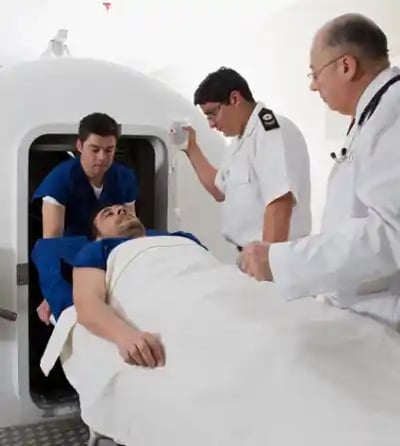
Hyperbaric treatment centers deliver specialized oxygen therapy in pressurized chambers to treat conditions like decompression sickness, chronic wounds, carbon monoxide poisoning, and radiation injuries. From monoplace and multiplace chambers to wound care integration, your center supports healing through precise protocols, safety monitoring, and multidisciplinary care.

That also means your risk is unique. A single chamber malfunction, improper pressure management, fire hazard, or delayed response to complications can lead to severe injuries, barotrauma, or oxygen toxicity claims. Insurance for hyperbaric treatment centers must address both clinical exposures (treatment errors, equipment failures, contraindication oversights) and premises risks (chamber explosions, patient injuries, facility hazards).

This page contains the following:

Get a Free Quote Now

Whether you operate a standalone hyperbaric facility, hospital-integrated program, or wound care center with HBOT, the right insurance program is vital to protect your equipment, patients, and staff from high-stakes liabilities.

Homewood Insurance Group partners with top carriers to deliver tailored General Liability and Professional Liability coverage for hyperbaric treatment centers at competitive rates.

Contact us today for a fast, no-obligation quote customized to your center.

Card image icon

Insurance for Hyperbaric Treatment Centers can include:

  • Covers elective and wound care hyperbaric oxygen therapy (HBOT).
  • Protection for oxygen toxicity, barotrauma, and off-label treatment risks.
  • Staff liability for physicians, technicians, nurses, and wound care specialists.
  • Optional inclusion of IV therapy, hormone therapy, and alternative services.
  • Limits up to $1M per claim / $3M aggregate; tail and retroactive coverage available.
  • Legal defense expenses covered in addition to liability limits

More information 

Insurance for Cancer Treatment Centers can include:

Malpractice or liability insurance can provide essential protection against these risks:

  1. Professional Liability (Malpractice Insurance)

    1. Coverage for negligence in treatment delivery, such as improper chamber pressure settings, inadequate patient screening, or failure to monitor for complications.
    2. Protection against claims of barotrauma, oxygen toxicity, or exacerbation of conditions due to contraindicated treatments.
    3. Liability for equipment-related errors, including chamber malfunctions, fire incidents, or failure to follow maintenance protocols.
    4. Claims from improper patient assessment, such as missing contraindications (e.g., untreated pneumothorax) leading to adverse events.
    5. Defense for documentation issues, incomplete consent forms, or disputes over treatment efficacy.
    6. Coverage for off-label uses, research protocols, or experimental indications when within scope.
    7. Optional extensions for multiplace chambers, dive medicine services, or wound care integration.
    8. Policy limits typically up to $1,000,000 per claim / $3,000,000 aggregate, with prior-acts and tail coverage available for expansions.
  1. General Liability Insurance

    1. Third-party bodily injury coverage for slip-and-fall incidents in treatment areas, waiting rooms, or during patient transfers.
    2. Protection for injuries to patients, visitors, or staff caused by chamber access hazards, oxygen handling, or facility maintenance.
    3. Property damage liability for accidental harm to equipment, building structures, or neighboring properties (e.g., fire spread).
    4. Personal and advertising injury coverage, including claims of defamation or misleading claims about treatment benefits.
    5. Coverage for multi-site operations or mobile hyperbaric units when scheduled.
    6. Pollution liability endorsement for oxygen-related incidents or chamber exhaust.
    7. Fire and explosion coverage, often with sub-limits, for pressurized environment risks.
    8. Standard limits commonly at $1,000,000 per occurrence / $3,000,000 aggregate, with umbrella options for high-volume centers.

⬆ Back to contents

The Cost of Insurance for Hyperbaric Treatment Centers

Costs are quoted annually unless noted, assuming no prior claims and standard endorsements. Higher chamber volume, multiplace setups, or off-label treatments can add 30–80% surcharges, as carriers view pressurized oxygen therapy as elevated risk.

Professional Liability (Malpractice) Insurance – Estimated Ranges

  • Often around $3,000 – $6,000 per year for a small center (1–2 chambers) with a clean record and $1M / $3M limits.

  • Facilities with multiplace chambers, high patient volume, or incident history may face surcharges of 40–80% or require specialized programs.

General Liability Insurance – Estimated Ranges:

  • Approx. $1,000 – $2,000 per year for a low-traffic facility with standard $1M / $3M limits.

  • Higher for centers with large chambers, oxygen storage, or fire-prone setups.

General Liability Insurance – Estimated Ranges:

  • Combining coverages can range from $4,000 – $8,000+ per year for smaller centers, with potential discounts for safety certifications. 

  • Larger or hospital-affiliated operations will scale accordingly.

Why do Hyperbaric Treatment Centers need Insurance?

Despite the therapeutic benefits of HBOT, the nature of the treatment and the environment in which it is provided expose hyperbaric treatment centers to specific risks and potential lawsuits. Here are key areas where they are vulnerable to being sued for malpractice:

  1. Treatment-Related Complications: HBOT involves breathing pure oxygen in a pressurized chamber, which, while generally safe, can lead to complications such as barotrauma to the ears and lungs, oxygen toxicity, or claustrophobia-induced distress. Centers can be held liable if patients suffer harm due to these complications, especially if proper precautions or monitoring were not observed.
  2. Failure to Obtain Informed Consent: Given the potential risks associated with HBOT, it is crucial that patients are fully informed about the benefits, risks, and alternatives of the therapy. Failure to obtain informed consent can lead to legal action if the patient experiences adverse effects they were not adequately warned about.
  3. Inadequate Patient Screening: Not all patients are suitable candidates for HBOT. Failure to screen patients thoroughly for contraindications, such as certain lung conditions or untreated pneumothorax, can lead to serious health consequences and potential lawsuits.
  4. Equipment Malfunction or Misuse: Hyperbaric chambers are complex medical devices that require proper maintenance and operation. Equipment malfunction or misuse can endanger patients, leading to hypoxic or hyperoxic incidents, fire risks, or other safety breaches.
  5. Fire Hazards: The enriched oxygen environment within the hyperbaric chamber poses a significant fire risk if safety protocols are not strictly followed. Fires in a hyperbaric chamber can have catastrophic outcomes, for which the treatment center could be held directly liable.
  6. Inadequate Staff Training and Supervision: Staff members must be adequately trained in operating hyperbaric equipment, monitoring patients during treatment, and responding to emergencies. Lack of training or supervision can lead to operational errors and patient harm.
  7. Failure to Communicate with Primary Care Providers: Effective communication between hyperbaric treatment centers and a patient’s primary healthcare providers is essential for coordinating care. Miscommunication or failure to communicate important medical information can result in suboptimal treatment outcomes or exacerbation of the patient’s condition.
  8. Misrepresentation of Benefits: Overstating the benefits of HBOT for conditions not approved by regulatory agencies can mislead patients and result in legal action if the promised outcomes are not achieved.

Malpractice or liability insurance provides financial protection against claims of negligence or malpractice, covering legal defense costs, settlements, and judgments. For hyperbaric treatment centers, this insurance is crucial for mitigating the financial and reputational risks associated with providing specialized medical treatments.

MedPro Group
Core Specialty
CNA Logo
Travelers Insurance
CFC Underwriting
Applied Underwriters
Tokyo Marine Insurance Group
crum-forster-bw
AIG Insurance
Ironshore
Strategic Comp
MagMutual
Genstar
Beazley
Empro Insurance
Great American Insurance
Skyward Specialty Insurance
Hudson Insurance Group
Huntersure Insurance
MIG Insurance
Kinsale Insurance

High-Risk Procedures and their Impact on your Premiums

While chemotherapy and standard radiation are widely covered, carriers closely review other services that carry elevated risk:

Procedure / Risk Type Description & Risks Insurance Impact
Chamber Operations (Pressure Management) Pressurization/depressurization errors leading to barotrauma, pneumothorax, or sinus issues. High-severity claims; PL premiums rise 40–70% without certified operators and daily checks.
Oxygen Toxicity Monitoring Failure to limit exposure or recognize signs of CNS/pulmonary toxicity, causing seizures or lung damage. Common driver of large settlements; adds 30–60% to PL rates without protocol adherence and staff training.
Fire Hazards Oxygen-enriched environments increasing fire risk from sparks, static, or prohibited items. Potentially catastrophic; requires fire endorsements and can add 50–100%+ surcharges without NFPA compliance.
Patient Screening & Contraindications Missing untreated conditions (e.g., pneumothorax, fever) leading to complications or death. Viewed as preventable; surcharges 25–50% unless supported by thorough intake and physician review.
Equipment Maintenance & Inspections Failures in chamber seals, valves, or alarms causing leaks, malfunctions, or entrapment. Elevates PL/GL premiums 20–45%; underwriters demand ASME/PVHO certification and logs.
Multiplace Chamber Operations Group treatments with higher fire/explosion risks and complex monitoring. Significantly higher exposure; often 50–80% premium increase or specialty markets.

⬆ Back to contents

What types of Insurance do Hyperbaric Treatment Centers need?

 
General Liability Insurance

General Liability Insurance

General Liability covers medical expenses and attorney fees which result from bodily injuries and property damage that your facility or organization could be legally responsible for.
 
 
Professional Liability Insurance

Professional Liability Insurance

Also known as malpractice insurance, this  protects facilities against claims related to malpractice, negligence, or injury resulting from resident care. Staff members will typically be covered by professional liability insurance.
 
 
sexual-molestation

Sexual Abuse and Molestation Insurance

Provides coverage for your hyperbaric treatment center against claims arising from alleged sexual misconduct or molestation by an employee or other representative of your organization. Essential for the senior living industry.
 
 
Commercial Property Insurance

Commercial Property Insurance

This protects your facility against damage or loss to your buildings, equipment, and other property, which can happen as the result of various risks such as fire, theft, or vandalism.
 
 
workers compensation insurance

Workers Compensation Insurance

Workers Compensation Insurance is usually mandated by law. It protects hyperbaric treatment centers and employees in case of work-related injuries or illnesses.
 
 
Cyber Liability Insurance

Cyber Liability Insurance

Covers you against financial losses associated with data breaches, cyber attacks, and other cyber incidents. Insurers will usually conduct rigorous testing of your online system to fix vulnerabilities as part of this policy.

 

Why Work With Homewood

Hyperbaric treatment centers face specialized pressurized and oxygen-rich risks that generic policies rarely cover adequately. At Homewood, we help you:

  • Connect with carriers experienced in hyperbaric and wound care, avoiding off-the-shelf plans that exclude fire or chamber exposures.
  • Customize coverage for your setup—monoplace, multiplace, or hospital-integrated—ensuring high-risk elements like oxygen handling are explicitly addressed.
  • Bolster applications with your safety certifications, operator training, maintenance logs, and emergency drills to secure competitive terms.
  • Build scalable solutions for growth—adding chambers, expanding indications, or integrating wound care without coverage gaps.
  • Fine-tune deductibles, limits, and add-ons like pollution, fire, or excess liability to align with UHMS standards and your risk tolerance.

Call: 608-395-7545 or
Fill Out the Form

Chris-for-web

Chris Worley

Chris specializes in sourcing the most suitable insurance for Hyperbaric Treatment Centers at the best price. You can call him or fill out the form and he will get your message directly.